I'm Spencer.
I'm the COO of a mid-eight-figure e-commerce company.
My day job is efficiency. Most output for the least input — across operations, supply chain, hiring, marketing, and finance.
It keeps me very busy.
Language learning is what I care about outside the work.
So I built the system that would give me the highest return on my time on something that actually matters: getting closer to the people I love.
I grew up in French immersion in Vancouver. I learned Japanese during COVID. I got to conversational Mandarin before my now-wife knew I was studying it.
Fluency Formula is what came out of stitching the three journeys into one system.

How I started.
French
the belief
age 5+
Japanese
the system
COVID
Mandarin
the proof
before Nancy
French — the belief.
I started French immersion school in Vancouver at five, and stayed in it through high school.
The thing that actually gave me an edge wasn't the school. It was the French family that moved down my street when I was nine.
Their house had a rule: only French inside. I spent years watching French Peter Pan on a loop and eating dinner in French.
By the time my teachers were telling me I was ahead of the other immersion kids, I just took it as proof that I was “good at languages.”
That belief turned out to be lucky, and wrong. But it carried me into the next language with zero hesitation.
Japanese — the system.
I started Japanese during COVID with my roommate. Two grown adults at a folding table writing dollar-store paper flashcards while watching beginner grammar videos.
I hired a teacher for $150 a session, never did the homework, and eventually dropped the whole thing.
The class wasn't the problem. I was. The method wasn't built for how a brain actually picks up a language, so I resisted it.
Then I stumbled into Stephen Krashen and comprehensible input. I started doing an hour of input a day on YouTube, tracked it every single day, and one year in I booked an iTalki call and asked the teacher to use only Japanese.
I froze for ten minutes. Then it came out.
That's when I learned the real lesson: I wasn't gifted. There was a system. And tracking it was the difference between doing it and not doing it.
Mandarin — the proof.
I met my now-wife Nancy a couple of years later.
Two weeks before she officially became my girlfriend, I quietly decided I was going to learn Mandarin (her family's mother tongue) and not tell her until I could speak it.
I committed to three hours a day of input minimum, which averaged out to a hundred hours a month.
Halfway through the year, on my birthday, I drank a bit too much and let it slip. We spent the rest of the night speaking Mandarin.
That accidental reveal landed somewhere around day 182.
I kept going, finished out the year averaging a hundred hours a month.
But the real test wasn't with Nancy. It was the first time her family heard me speak.
They had no idea I'd been studying.
And the day job didn't suffer either…
(This was happening all at the same time.)
That's the run that became the proof Fluency Formula needed.

The native-speaker verdict
Then China found out.
In August 2026, a clip of me speaking Mandarin with a stranger went viral on Chinese social media. Millions of views later, native speakers flooded my YouTube comments.
To be clear about who is talking here: these are not students being polite. They are native Chinese speakers, the toughest audience a foreigner's Mandarin can face, saying this to a stranger for free.
Some of the thousands of native-speaker comments, verbatim, with translations:
哥们你居然能发现中国人的音调问题,你说的那几个词确实中国人自己都说不对😂😂Bro, you can actually spot Chinese people's own tone mistakes, those words you mentioned, Chinese people themselves often get wrong 😂😂
太牛了吧,都没有口音比很多中国人说的都好,天才!That's incredible, zero accent, better than a lot of Chinese people, a genius!
你的中文比一些在中国住了十年的人都好,可以试着在大陆开一个视频账号,用你学习中文的方法教学其他语言,也许可以帮助到很多人Your Chinese is better than some people who've lived in China for ten years. You should try opening a video account on the mainland and teach other languages using your method, it could help a lot of people.
真的特别有天赋,太棒了,前后鼻音比我说得都清楚Genuinely so talented, amazing, your front and back nasal sounds are even clearer than mine.
普通话比我好😳His Mandarin is better than mine 😳
普通话发音比我准😂His Mandarin pronunciation is more accurate than mine 😂
从路西法抖音来的只能说这哥们儿太有语言天赋了,发音水平完全就是本地人水平❤Came here from Lucifer's Douyin, all I can say is this guy has way too much talent for languages, his pronunciation is completely at a native speaker's level ❤
你的中文简直是母语水平了🤩Your Chinese is basically native level 🤩
你的中文很棒很流利 甚至会用到成语 这真的很厉害 而且交流的时候也很谦逊和礼貌 可以考虑一下 创建一个抖音账号做英文教学 加油👏Your Chinese is great and fluent, you even use chengyu (idioms), that's genuinely impressive. And you're humble and polite when you talk. You should consider starting a Douyin account teaching English. Keep it up! 👏
从路西法抖音来的,如果真的只是学习了两年半,那你这个语言天赋和学习方法真的是惊人的,发音和用词都太地道了Came here from Lucifer's Douyin, if you really only studied for two and a half years, then your talent and method are truly astonishing, your pronunciation and word choice are so authentic.
两年半把中文说成这样,只能说是天才啊Speaking Chinese like this after two and a half years, the only word for it is genius
从B站来的,问了下chatgpt没想到第一个可能的博主就是你哈哈哈。Spencer你真的太厉害了,不说谁知道你才学了两年半中文😮Came from Bilibili, asked ChatGPT and didn't expect the top match for the blogger to be you, hahaha. Spencer, you're truly amazing, if you hadn't said so who would know you've only studied Chinese for two and a half years 😮
慕名而来!你中文太棒了!!!我也在学习外语,不过我学的是日语。很难想象外国人能在短短两年半把中文说得这么好!Came here because I heard about you! Your Chinese is amazing!!! I'm learning a foreign language too, but I'm learning Japanese. It's hard to imagine a foreigner could speak Chinese this well in just two and a half years!
慕名而来。两年半中文说的那么好,真的太厉害了Came here because I heard about you. Speaking Chinese this well after only two and a half years, that's truly amazing.
哥们你中文真好啊,从你连线新疆那哥们视频过来的Bro your Chinese is really good, came from your livestream video with the Xinjiang guy
两年半能把中文练到这个程度真的太厉害了,要是我学雅思也这么开窍就好了😢😢Reaching this level of Chinese in two and a half years is truly amazing, I wish I had this kind of breakthrough studying for IELTS 😢😢
已经关注你的Bilibili和YouTube频道了,你的视频质量真的很高,教学非常棒,你或许可以尝试在Bilibili发布一期入驻视频,把Lusiferr的视频作为素材简单地介绍自己(大多数中国大陆人都无法观看YouTube的视频你懂的,所以多数人都是通过那期视频而认识你的),Lusiferr的视频已经上了Bilibili的热门,这离不开你们两个之间的友好交流❤
祝你的频道越来越好🎉I've already followed your Bilibili and YouTube channels, your video quality is genuinely excellent, the teaching is fantastic. You could try posting an intro video on Bilibili using Lusiferr's video as material to introduce yourself (most people in mainland China can't watch YouTube, you know, so most people found out about you through that video). Lusiferr's video already trended on Bilibili, and that's thanks to the friendly exchange between you two ❤ Wishing your channel keeps growing 🎉
抖音来的,bro 你应该开一个抖音账号。会是你这个账户粉丝的100倍。你真的很棒Came from Douyin, bro, you should open a Douyin account, you'd get 100x the followers you have here. You're genuinely great
牛逼,确实是天才,天老爷我也想和博主一样😂太有语言天赋了Badass, truly a genius, good lord I want to be like this guy too, so much natural talent for languages
很好奇,你来过中国吗,如果没来过欢迎你来!你现在的中文水平就像在中国待了十年的老外😂Curious, have you ever been to China? If not, come visit! Your Chinese right now is like a foreigner who's lived in China for ten years
我也是从新疆那个博主那里来的 omg你的中文真的太棒了 我大概能懂你视频的意思 我想问问你或许能不能为我们非英语母语者准备一些如何快速学习英语的specific教程❤I'm also here from the Xinjiang blogger's video, omg your Chinese is really amazing, I can roughly follow your videos. I wanted to ask if you could put together some specific tutorials for us non-native English speakers on learning English fast ❤
我也是從中國抖音來的,太佩服了哥兒們兩年半就能講出這麼流利的中文。來向你學習語言🎉I'm also here from Douyin in China, so impressed, bro, only two and a half years and you can speak such fluent Chinese. Coming to learn language-learning from you 🎉
抖音来的,你的中文也太好了吧,你肯定不止学了两年半,你肯定是个小黑子,故意说两年半😂不小心露出了你的鸡脚🐔😂Came from Douyin, your Chinese is way too good, you must've studied way more than two and a half years, you sandbagger, you accidentally let your tell slip 🐔😂
从抖音的连线视频过来的,你的中文真的讲的很好!!🎉🎉🎉两年半学到这个程度,太厉害了Came here from the Douyin livestream-call video, your Chinese is genuinely spoken really well!! 🎉🎉🎉 Reaching this level in two and a half years is amazing.
你的中文好的像母语者一样, 要是我学英文也有这水平就好了。我真的要研究一下你到底怎么学的了Your Chinese is as good as a native speaker's. I wish my English was at this level. I really need to study how exactly you learned.
真的太牛了两年半,能不能反过来分享一下有没有学英语的诀窍You're really amazing, two and a half years, could you share your secrets for learning English?
太厉害了,语言天才,你在中国版抖音出名了Amazing, a language genius, you're famous on Chinese Douyin now
太厉害了 两年半说这么好 简直语言天赋拉满❤So amazing, speaking this well after two and a half years, pure maxed-out language talent ❤
看到你中文连线的视频了,讲得太棒了Saw your Chinese livestream-call video, you spoke amazingly.
兄弟你这语言学的太好了,有没有什么学习语言的技巧?我明白努力是必不可少的,但如果能少走弯路肯定更好,我刚入门西语,舌头快要打转了😂Bro your language learning is incredible, any tips? I know effort matters, but avoiding wasted time would help, I just started Spanish and my tongue's already tied in knots haha
bro,你真的需要一个抖音账号,科学的认知,加上你还是外国人学习的猎奇,em,新奇的视角,在油管上太屈才了❤Bro you seriously need a Douyin account, the scientific angle plus the novelty of a foreigner learning Chinese, it's such a fresh perspective, you're wasted on YouTube ❤
我是来膜拜语言天赋型选手的I'm here to worship the language-talent prodigy.
从路西法连麦那里过来的,你的中文无敌了,希望看你能帮助我学英文🌚Came here from Lucifer's livestream call, your Chinese is unbeatable, hope you can help me learn English 🌚
膜拜天才来了The genius-worshipper has arrived.
小红书路西法视频过来的,中文两年半学得很地道Came from Lucifer's video on Xiaohongshu, his Chinese sounds so authentic after just two and a half years.
不敢相信学习两年多能说到这种程度Can't believe he can speak to this level after just two-plus years of studying
可以在简中平台开号分享语言学习经验了,这中文真的牛的❤You could open an account on a Chinese platform to share your language learning experience, this Chinese is genuinely badass ❤
哥,你的中国粉丝即将爆增。你的中文也太好了,特地翻过来想跟你学习怎么快速掌握一门语言。但是发现,我听不懂😂Bro, your Chinese fanbase is about to explode. Your Chinese is too good, I came all this way to learn how to master a language fast, but turns out I can't understand a word of English 😂
我是从路西法那边过来的,哥们,普通话说的太地道了😂I came over from Lucifer's, bro, your Mandarin is so authentic 😂
太强了老哥,语言天才中的天才😂So strong, bro, a genius among geniuses 😂
你的中文真不错,我也想把英语练的和你的中文一样好Your Chinese is really good, I want to get my English as good as your Chinese
一坤年居然能把中文学得这么好Managed to learn Chinese this well in just 'one Kun year'
我在中国抖音上看到你,看到你和一个中国新疆博主连麦,你的中文很流利,于是我就特意跑到YouTube上来看你,但我给你提点建议,就是给视频加上英语字幕,因为对于英语学习者来说,没有字幕相当于听天书😂Saw you on Chinese Douyin calling with a Xinjiang blogger, your Chinese is really fluent, so I came specially to YouTube to check you out. One suggestion though, add English subtitles, because for English learners a video with no subtitles is like reading hieroglyphs 😂
你的中文太棒了Your Chinese is amazing.
太牛了,感觉你应该是有语言天赋的人吧So amazing, I feel like you must have a real gift for languages.
兄弟你中文说的太好了,特意来关注你看看能不能学到一些学语言的好方法🎉Bro your Chinese is so good, I came specifically to follow you and see if I can pick up some good language-learning methods 🎉
从路西法的视频来的,你的学习能力好强啊,考虑一下开通一个小红书的账号吗?肯定会有很多粉丝关注你的Came here from Lucifer's video, your learning ability is so strong! Have you thought about starting a Xiaohongshu account? You'd definitely get a ton of followers.
牛逼兄弟,我看了你的连线视频来的,你这个太强了,等我看看你的视频学习一下Badass, bro. I came after watching your livestream-call video, this is next level. I'm gonna check out your videos and learn from them.
慕名而来 太🐂🍺了 一坤年中文能到这个程度Came here because I'd heard of you, so freaking badass 🐂🍺, reaching this level of Chinese in such a short time.
我从抖音来的,哥们儿你的中文说的太棒了。你可以认真考虑一下如何把你学中文的方法告诉中国人如何学英文,让更多人认识你,了解你的方法。I came here from Douyin, bro your Chinese is amazing. You should seriously think about teaching Chinese people how to learn English using your method, so more people get to know you and understand it.
说实话 你学中文很有天赋 欢迎来中国发展Honestly, you have real talent for learning Chinese. Welcome to build a career in China.
天哪,你可以在中国抖音开设账号,我相信粉丝一定会特别多!Oh my god, you should open an account on Chinese Douyin, I bet you'd have tons of fans!
一坤年就精通中文雀氏牛逼Mastered Chinese in barely 'one Kun year,' that's genuinely badass
兄弟,或许你知道小红书嘛?我刚在小红书上刷到你和新疆兄弟的聊天,你真的太牛了!我感觉你去小红书上注册一个账号会一炮而红的hhhBro, do you know Xiaohongshu? I just saw your chat with the Xinjiang bro there, you're seriously amazing! I feel like if you made an account there you'd go viral instantly haha
from Lucifer,恐怖的天赋From Lucifer's, terrifying talent
哔哩哔哩中看到了你和那位新疆人对话的视频来的。
在评论区中找到你,过来关注了。由于中国政策原因,中国民众无法通过常规手段进入YouTube的。所以如果你能在哔哩哔哩上开通一个账号,我感觉会更好❤❤Saw your conversation with that guy from Xinjiang on Bilibili. Found you through the comments and came to follow. Because of China's internet policies, most people in mainland China can't access YouTube normally, so if you could open a Bilibili account, I think it'd be even better ❤❤
b站来的,😂兄弟中文学习的不错,其实好多用词中国人自己也不太讲究,主打一个口语化😂Came from Bilibili 😂 bro, your Chinese is pretty solid, honestly a lot of word choices even native Chinese speakers aren't that strict about, it's mostly just colloquial style
厉害啊!!!!!非常牛逼Amazing!!!!! Truly badass
你在这边的视频平台开个号绝对火!🎉🎉If you opened an account on this side (Douyin), you'd definitely go viral! 🎉🎉
兄弟 我将彻夜研究你的所有语言学习视频Bro I'm going to spend all night studying every one of your language-learning videos
抖音刷到了你跟路西法的视频了,马上来关注了😂Saw your video with Lucifer on Douyin and immediately came to follow you hahaha
老哥,你这流利的普通话,我感觉你去中文视频平台去教学,流量肯定很好Bro, with Mandarin this fluent, I feel like if you taught on a Chinese platform you'd get huge traffic
你是个天赋型选手啊 太强了You're a naturally talented player, so strong
语言天赋,你的中文连线火了,想跟你学英文了哈哈Language talent, your Chinese call went viral, now I want to learn English from you too haha
作者真的很厉害,希望能成为像你一样厉害的人,improve my spoken English 🎉🎉This creator is genuinely amazing, I hope to become someone as impressive as you, improve my spoken English 🎉🎉
我将彻底研究你的视频 I hope my English can be as fluent as your ChineseI'm going to study your videos thoroughly, I hope my English can be as fluent as your Chinese
你中文说得太好了吧,快出视频教教怎么学的,我想学英文Your Chinese is too good, hurry up and make a video teaching how you learned it, I want to learn English
from "路西法Lusiferr" in Bilibili website, your Chinese is so good!from "Lusiferr" on Bilibili, your Chinese is so good!
抖音刷到,你这语言天赋太厉害了,关注了博主Saw it on Douyin, your talent for languages is amazing, followed you.
两年半说成这样,NBSpeaking like this after two and a half years, badass.
你的中文说很好,爱来自瓷器❤Your Chinese is really good, love from China ❤
你好,你中国少数民族博主连线的视频被博主发到中国抖音频道了,我想你应该看到了,很受大家欢迎!祝你的播客一路长虹!🎉🎉🎉Hi, your video calling with the Chinese ethnic-minority blogger got posted to a Douyin channel, I think you should know, it's really popular with everyone! Wishing your podcast great success! 🎉🎉🎉
抖音过来的,真的很需要你分享你是如何两年半学的这么好的,我需要用到我的英语上😂Came from Douyin, I really need you to share how you got so good in two and a half years, I need it for my own English 😂
抖音过来的,你真的应该分享一下怎么在两年半的时间把普通话说得那么地道的😁Came from Douyin, you should really share how you made your Mandarin this authentic in two and a half years 😁
来学习了~你的中文真的很好😊Here to learn~ your Chinese is really good 😊
從b站來的🎉你中文講的超棒,正好想學一門新的預言,過來取經❤Came from Bilibili 🎉 your Chinese is super good, and I happen to want to learn a new language, so I came to learn from you ❤
兄弟你的视频质量真的很不错让我这种平时不怎么看英文视频的人都能看得下去🥰👍Bro, your video quality is genuinely great, it made even someone like me who doesn't usually watch English videos able to watch all the way through 🥰👍
Lol Dude 刚看了Lusiferr B站的视频,立刻就跑来关注你了!真的好有才!👍Lol Dude, just watched Lusiferr's Bilibili video and immediately came to follow you! You're really talented! 👍
看来已经涨了快三千订阅😂Looks like you've already picked up almost 3,000 subscribers 😂
中国来的 真想跟你学学怎么快速学语言 太牛逼了Came from China, I really want to learn how you pick up languages so fast, so badass
你的中文真的很棒 😮Your Chinese is really great 😮
兄弟 你是在国外非中文环境下学习中文到这个程度吗Bro, did you really learn Chinese to this level outside of a Chinese-speaking environment?
慕名而来 bro your Chinese is so goodCame because of your reputation, bro your Chinese is so good
我必须立刻关注你I had to follow you immediately.
加油 你要火了Keep it up, you're about to blow up.
哈哈 兄弟 你在中国火起来啦 加油💪Haha bro, you've gone viral in China, keep it up! 💪
语言天赋太牛了哥们Language talent way too crazy, bro.
特意从哔哩哔哩来关注你Came specially from Bilibili to follow you
看到您高情商对话,赶紧过来学英文Saw your emotionally intelligent conversation and rushed over to learn English
一坤年,这个成就有点牛。'One Kun year', that's a pretty impressive achievement
油管这么卷吗 感觉这个视频质量在b站少说也得有5万播放量吧Is YouTube really this competitive? I feel like a video of this quality would easily get 50,000+ views on Bilibili.
支持您来小红书or bilibili教我们英语!Would love for you to come teach us English on Xiaohongshu or Bilibili!
哥们儿真牛逼Dude, that's straight-up badass.
太厉害了,特地来学习一下方法So amazing, came here specifically to learn your method.
太厉害了,要是我学英语也能这么快就好了So amazing, wish I could learn English this fast too.
好厉害啊,我是看到你和Lucifer的一段视频,然后搜到的你,关注啦😊😊😊So amazing, I saw a clip of you and Lucifer, searched you up, and followed 😊😊😊
爱来自抖音,哥们儿语言天赋太强了Love from Douyin, bro your talent for languages is way too strong.
小红书刷到,你真的好厉害🎉关注你向你学习Saw it on Xiaohongshu, you're genuinely amazing 🎉 following you to learn from you.
从抖音来的❤中文说的很好,我正在学习西班牙语哈哈哈Came here from Douyin ❤ your Chinese is really good, I'm learning Spanish right now, hahaha
你太厉害了,要是我学英语也有那么快就好了You're so amazing, wish I could learn English that fast too.
爱来自中国❤Love from China ❤
如果你要开一个抖音账号 我可以帮忙(我尽力)我是一个抖音上小小的英语博主If you want to open a Douyin account I can help (I'll try), I'm a small English content creator on Douyin
小红书来的,哥你火了😂Came from Xiaohongshu, bro you've gone viral haha
坏了我成老外了😂Damn, now I'm the foreigner here 😂
小红书来的,希望我也可以两年把英语说到流利的程度😂Came from Xiaohongshu, I hope I can get my English this fluent in two years too 😂
抖音来的 你太牛了Came from Douyin, you're awesome
哥们,在抖音开个号吧,你会火的,太牛逼了Bro, open a Douyin account, you'll blow up, you're so badass
来了来了 中国粉丝来了 你要火了兄弟🎉Here they come, the Chinese fans are arriving, you're about to blow up bro 🎉
快注册一个中文抖音,粉丝量绝对破百万Hurry up and make a Chinese Douyin, you'd definitely break a million followers
慕名而来,你的视频教学方法值得学习❤😂Came because of your reputation, your teaching method is worth learning ❤😂
慕名而来❤❤❤❤❤Came because of your reputation ❤❤❤❤❤
太棒了兄弟 抖音来的Awesome, bro, came from Douyin
b 站来的,看看这哥们咋学的太牛了Came from Bilibili, checking out how this guy learned Chinese, so amazing.
厉害👍,专门过来关注一下Amazing 👍, came here specially to follow you.
太厉害了,从路西法的视频过来So amazing, came here from Lusiferr's video.
b站来的😊Came from Bilibili 😊
我从抖音来的,哈哈。来跟你学英语了Came from Douyin haha, here to learn English from you
抖音来的,follow了兄弟Came from Douyin, followed you, bro
我觉得你做一个bilibili 的频道 一定会火的🔥I think if you made a Bilibili channel it'd definitely blow up 🔥
好想听你教英文,感觉你会很懂中文母语者学习英文的难点在哪❤Really want to hear you teach English, feels like you'd really understand where native Chinese speakers struggle with it ❤
刷个抖音…我成老外了😮Scrolling Douyin... now I'm the foreigner here 😮
慕名而来🐱Came here because I heard about you 🐱
你现在当务之急是去 B 站创建一个账号,并用中文教我们英语😂Your most urgent task right now is to make a Bilibili account and teach us English in Chinese haha
我去,我看了新疆小哥的视频来了Whoa, I came here after watching the Xinjiang guy's video
你好厉害!向你学习~You're so impressive! Learning from you~
中文很好❤Your Chinese is really good ❤
好厉害…顺便还能练练听力😉So impressive... and I get to practice my listening on the side 😉
抖音来的,想学习博主学外语的秘诀😊Came from Douyin, want to learn the secret to your language learning 😊
你又增加了一个粉丝😅我在努力学习英文You just gained another fan 😅 I'm working hard to learn English.
你要火啦🎉🎉You're about to blow up 🎉🎉
从 Lucifer 来的到这里来举手🙋♂️哈哈哈哈Raising my hand, came from Lucifer's, hahaha 🙋♂️
哥 你有没有想法进驻抖音 或者就在油管上出中文版的学习一门外语的方法 我的英语水平还不支持我学习你的英文讲解视频Bro, any plans to get on Douyin, or at least put out a Chinese-language version of your language-learning method on YouTube? My English isn't good enough yet to follow your English explanations
路西法视频过来+1,试图在这里练练英文听力哈哈哈Came here from Lucifer's video +1, trying to practice my English listening here hahaha
已严肃支持🤓Officially and seriously supporting you now 🤓
英语说的不错嘛小伙子😊Not bad at all, kid 😊
从路西法那里来的 特意前来学习!结果一看头像和视频封面有点被吓到了 你看上去好凶哦😂明明在那个连线视频里看起来非常友善 哈哈Came here from Lucifer, specifically to learn from you! But your profile picture and thumbnail kind of scared me, you look so fierce 😂 you seemed so friendly in that livestream video though, haha
太厉害了哥So amazing, man.
两年半👍Two and a half years 👍
可以开一个抖音账号,我愿意关注你哈哈哈You should open a Douyin account, I'd happily follow you, hahaha
新疆哥么那儿来的🎉🎉🎉Came here from the Xinjiang guy's video 🎉🎉🎉
还在磨蹭啥呢?速度来中国大陆社交媒体开账号What are you waiting for? Hurry up and get on Chinese mainland social media
太厉害了So amazing
天才Genius
新疆小哥那里过来的围观😊 要不你说说西班牙语或者韩语有什么formulaCame to watch after the Xinjiang guy's video 😊 how about sharing your formula for Spanish or Korean too?
你在抖音开教育账号可以致富了If you opened an education account on Douyin you'd get rich
天才Genius
受益良深❤Learned so much from this ❤
慕名而来+1🎉Came because of your reputation +1 🎉
坏了,我成老外了Damn, now I'm the foreigner here
小红书上来,来取经了!Came from Xiaohongshu (RedNote), here to learn your secrets!
牛逼broBadass, bro
快给 lucifer 买杯咖啡😂 流量带过来好多😂Hahaha, someone buy Lucifer a coffee, he brought so much traffic over here
抖音过来的,关注了Came from Douyin, followed
慕名而来Came here because I'd heard of you.
求你了 开个英语教学视频!!!Please, please make an English teaching video!!!
火箭速度Rocket speed
从抖音来的,哈哈哈哈。Came from Douyin, hahahaha.
从bilibili来的¯꒳¯Came from Bilibili ¯˳¯
如果能加上字幕就好了😂😂我也想学习英语Wish you'd add subtitles 😂😂 I want to learn English too
从抖音过来来学习一下如何快速学习一门语言Came from Douyin to learn how to pick up a language fast
哈喽!我从路西法的视频过来的!哈哈Hello! I came from Lucifer's video! Haha
小红书来的哈哈哈哈哈哈Came here from Xiaohongshu hahahahaha
来了老弟I'm here, bro
开个小红书账号吧哥们Open a Xiaohongshu account, bro
我们需要中文字幕,we need Chinese!!!😂😂We need Chinese subtitles, we need Chinese!!! 😂😂
从连线来的,我的英语很差,来学习怎么比较快学习一门语言,想学习英语Came from the livestream call, my English is poor, came to learn how to pick up a language faster, want to learn English
哈哈哈,从连线来的Hahaha, came from the livestream call
路西法那来的哈哈Came from Lucifer's, haha
抖音来的兄弟们😊Fellow Douyin arrivals here 😊
Straight from the source
And on Chinese social media itself.
The clip did not just reach YouTube. It went viral on the Chinese platforms themselves, TikTok and Douyin, where the audience is almost entirely native speakers. These are untouched screenshots of what they said there (translated in-app), likes and all.
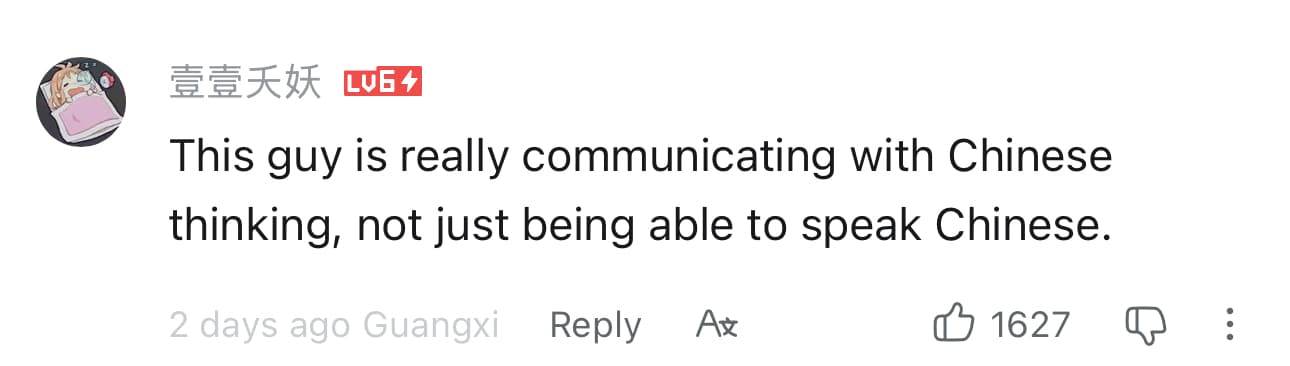
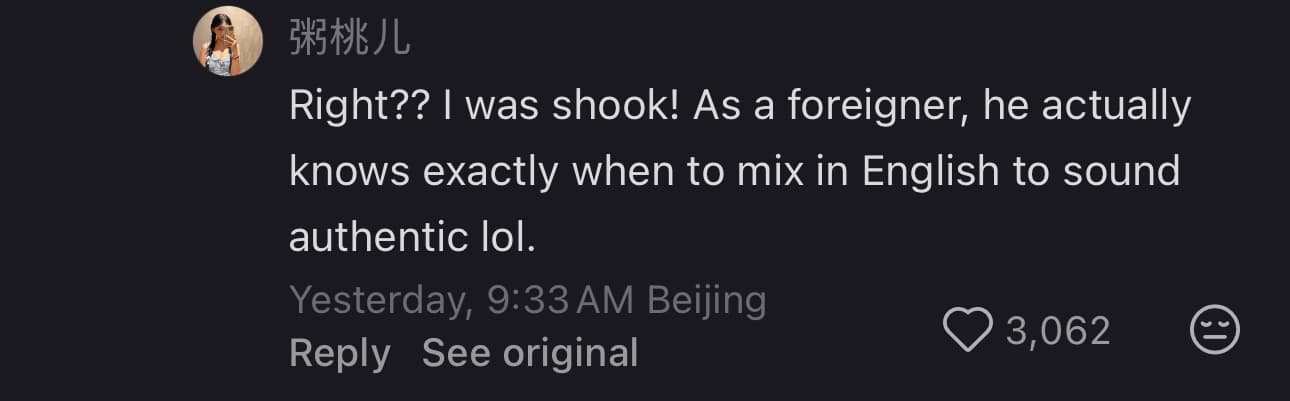
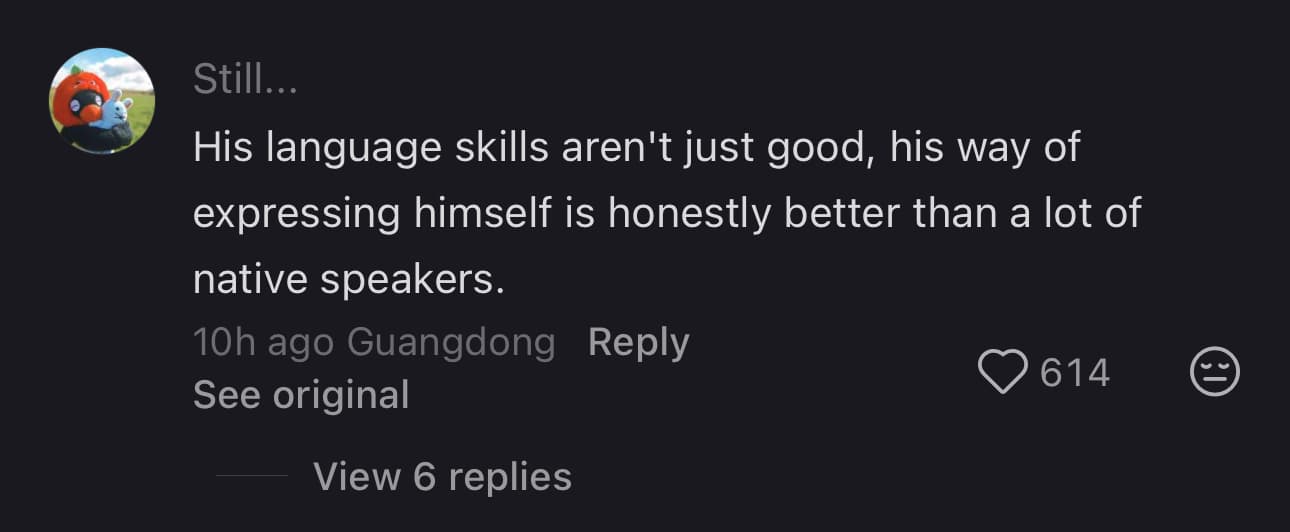
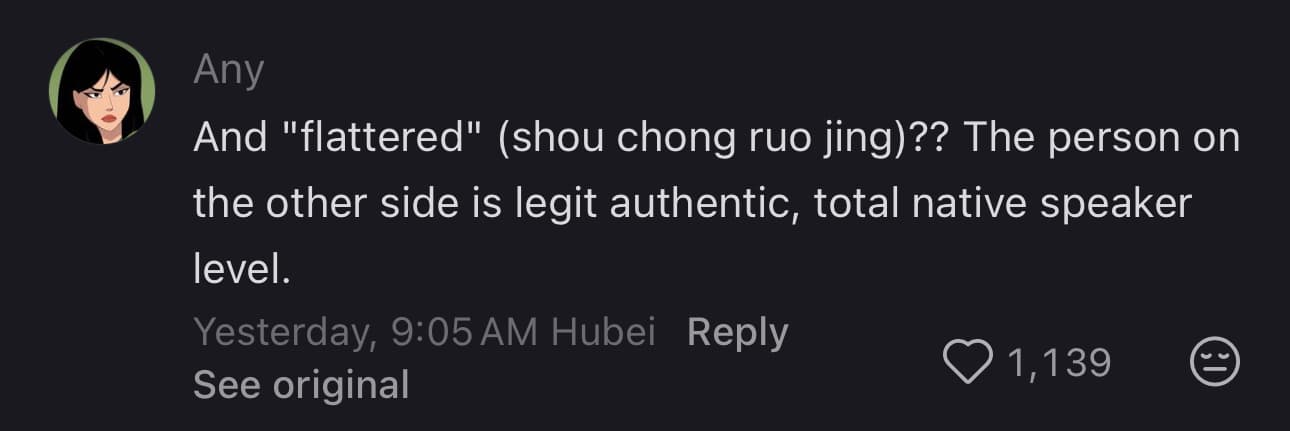
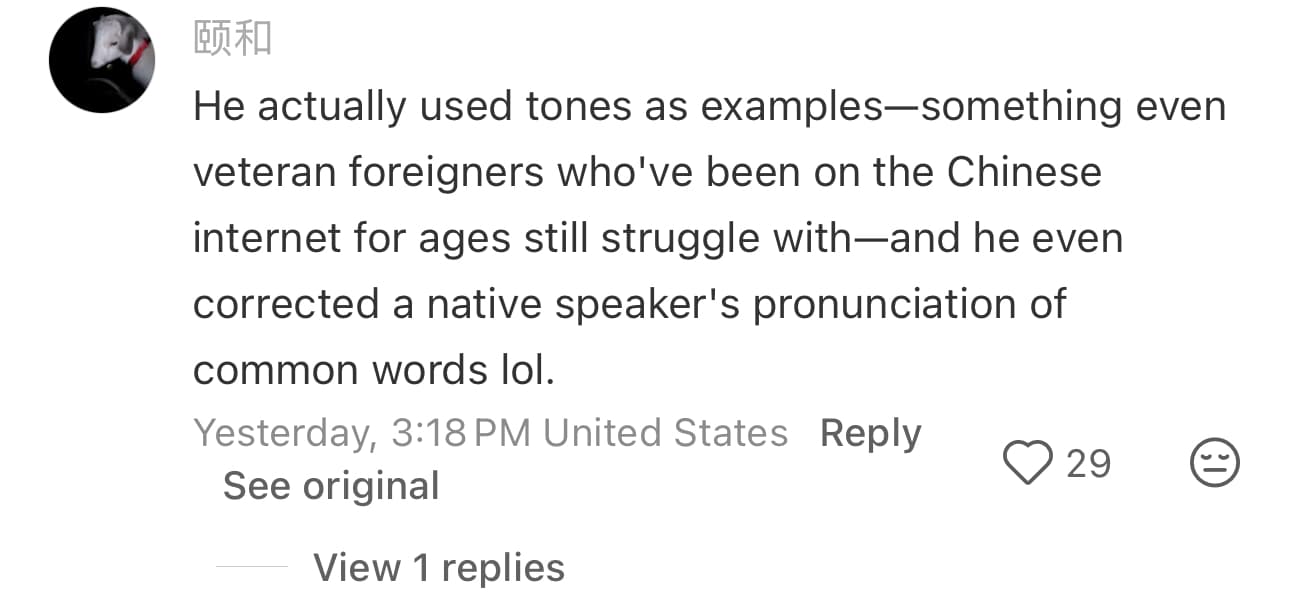
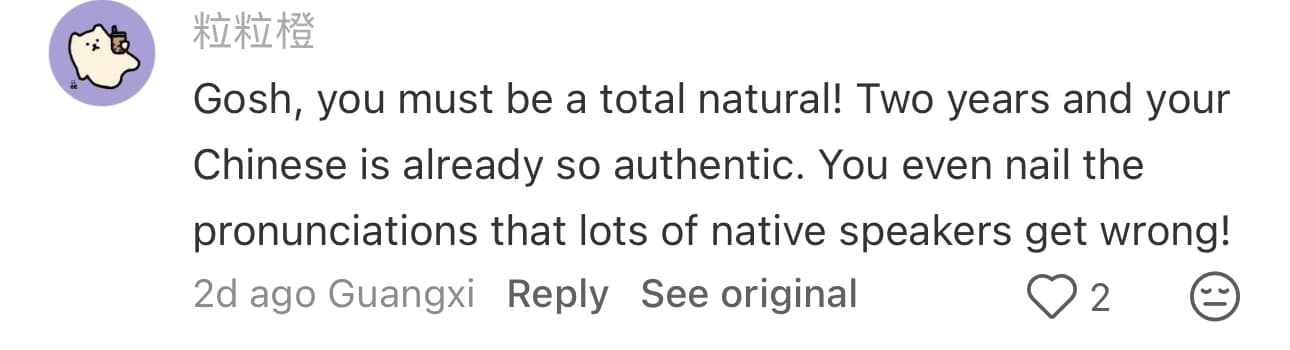

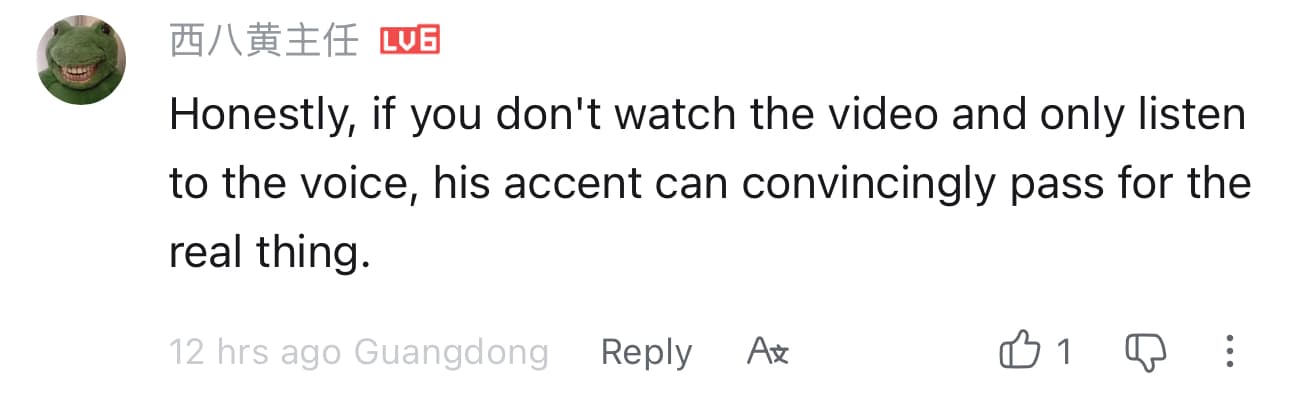
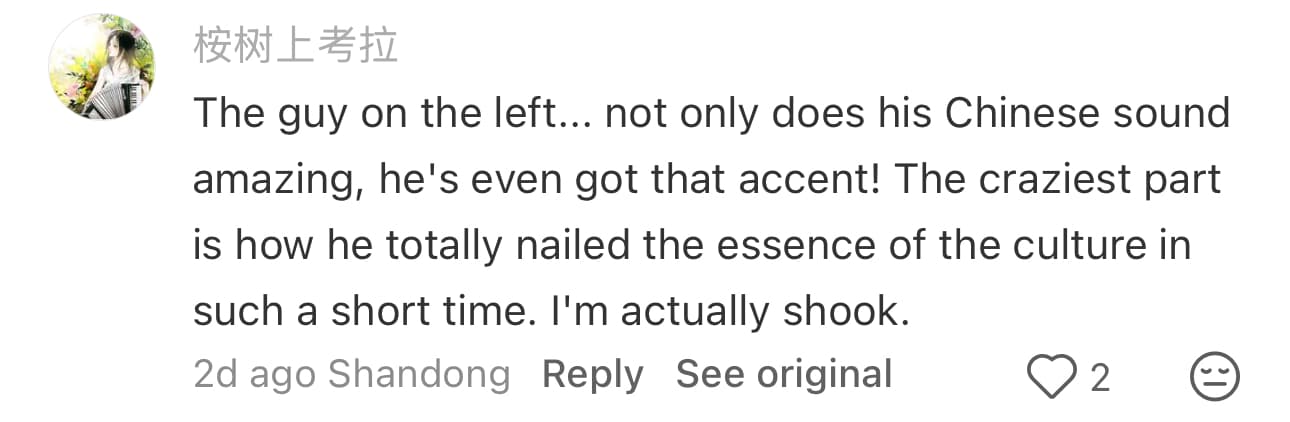
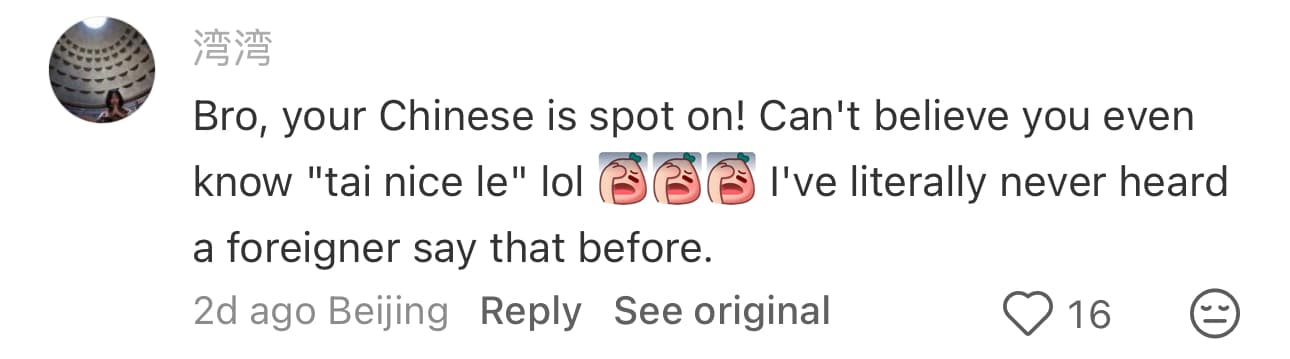
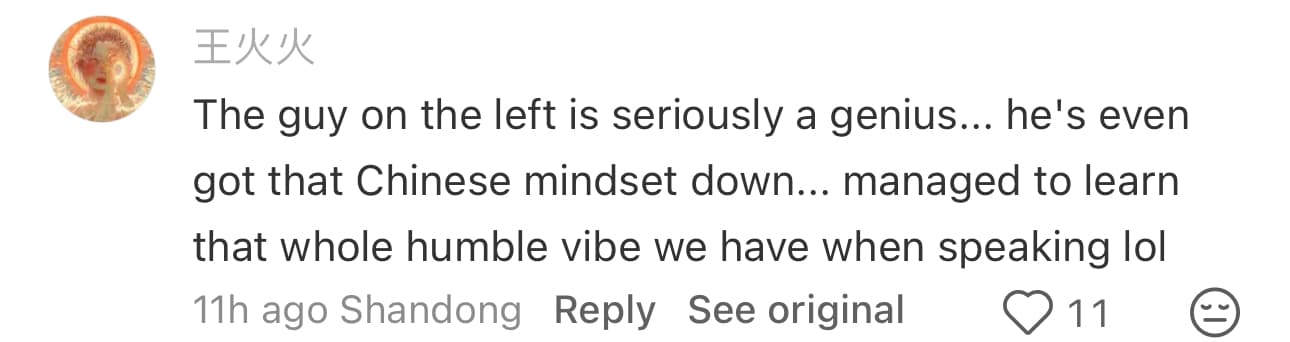
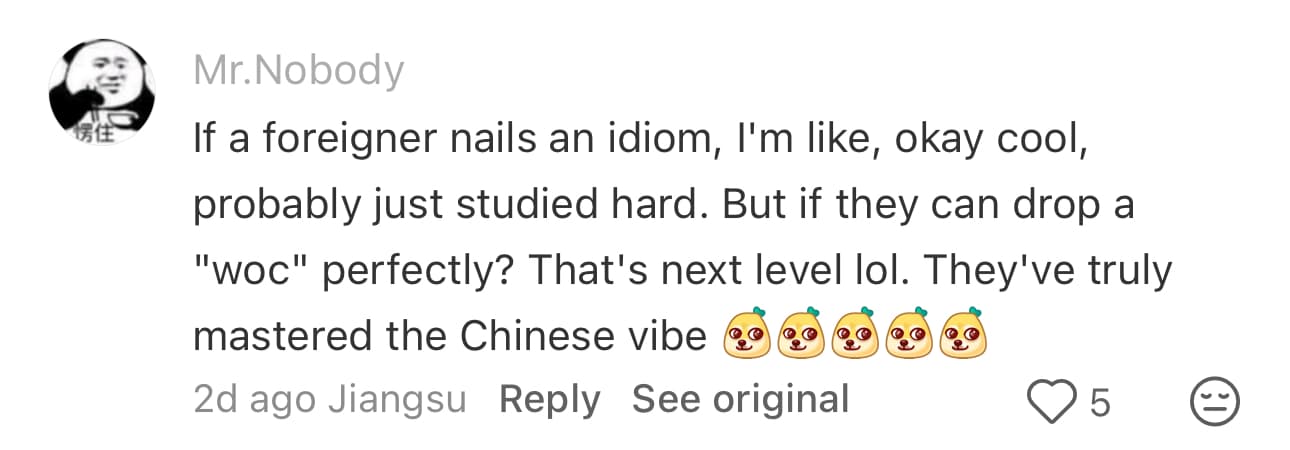
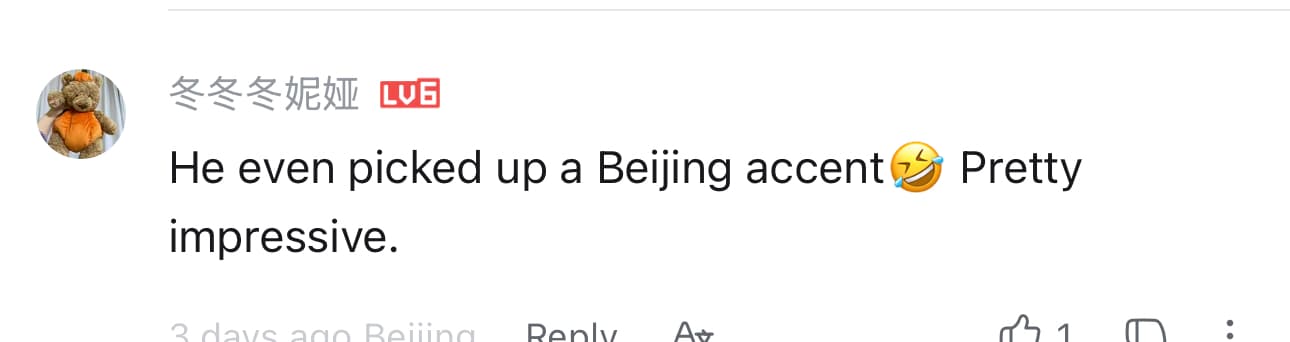
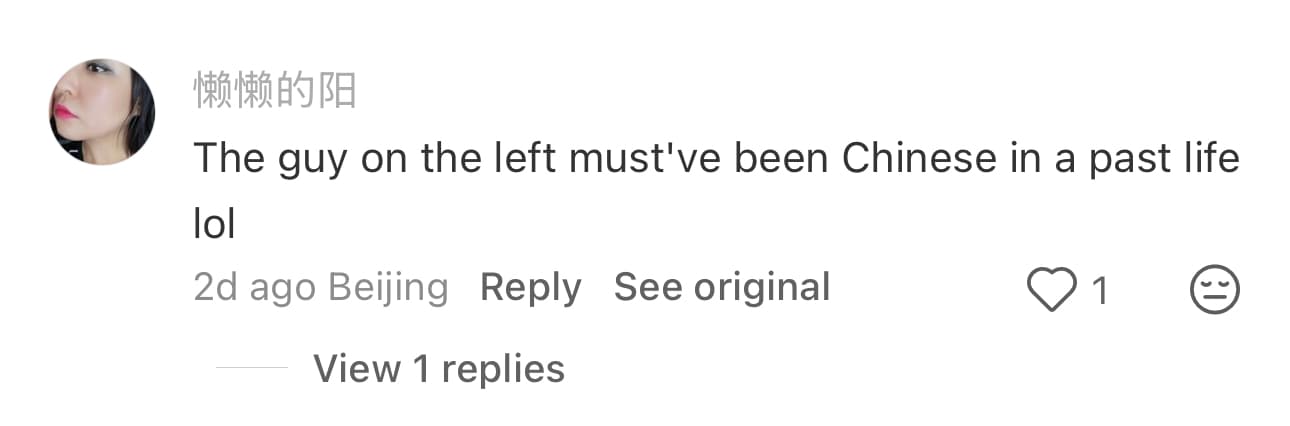
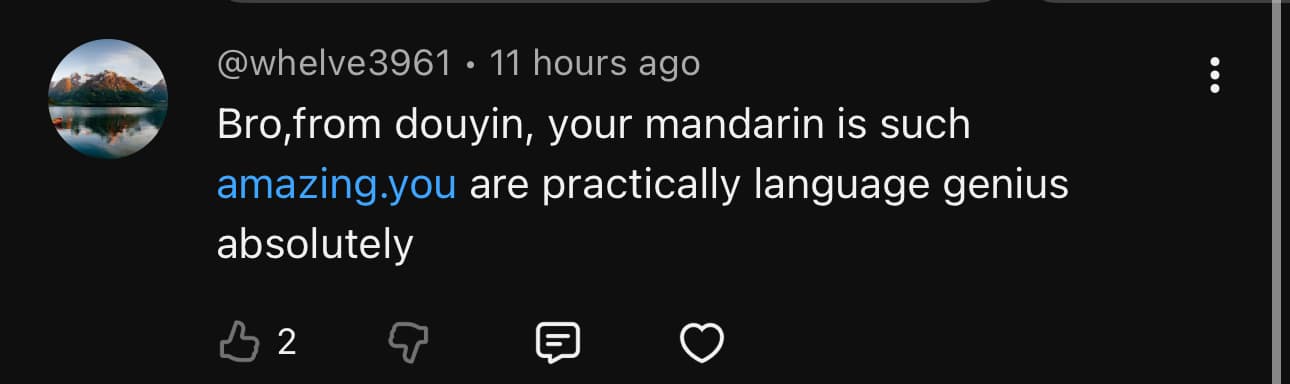
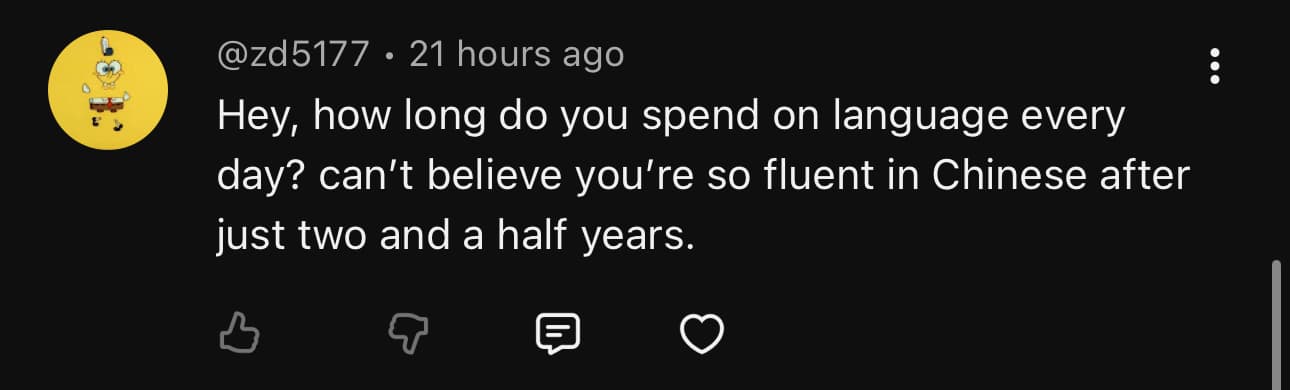
This is the level Fluency Formula is built to get you to.
I did not grow up around Chinese. I started from zero as an adult and ran the exact system I teach inside Fluency Formula. Give it consistent time, and natives mistaking you for one of their own is the level you can eventually reach.
Why Fluency Formula exists.
Most of the language-learning world teaches principles.
Comprehensible input is great in theory. But nobody hands you a day-by-day protocol that says exactly what to read, what to listen to, what to drill, and for how long, until you're holding real conversations.
So every January, everyone restarts.
FF is the path I wish I'd had on day one of Japanese — the same protocol I ran to get conversational in Mandarin in 182 days while running an eight-figure company.
A daily protocol, a live cohort, a tracker that holds you to it, and a coach who knows your name. The full breakdown of what's actually in the box lives on the homepage.
It's not a course. It's not a content library.
It's a path, with a destination — conversational fluency — that's actually measurable.
It's explicitly not gamified, not “hacky,” not a secret. The premise is the opposite: structure plus consistency plus the right method, repeated long enough to matter.
If you want streaks and confetti, this isn't it. If you want to actually learn the language, it is.
How I think about language.
Comprehensible input is the engine. Your brain is pattern-recognition machinery.
Give it input that's just past your level, often enough, for long enough, and it figures the language out the same way it figured out your first one.
The job of a system is to deliver that input at the right difficulty and keep you in motion when you don't feel like it.
Consistency beats intensity. The mediocre system you actually do is infinitely better than the perfect system you don't.
Input
the engine
Consistency
the multiplier
Tracking
the proof
I spent a year doing an hour of input every day with Japanese before I'd ever spoken a word.
With Mandarin I averaged a hundred hours a month for a year.
Both worked because they were tracked, every day. What gets measured gets done.
The problem was never the learner. It was the method.
Most people who stall on a language don't have a discipline problem. They have a sequencing problem.
Hand them the right protocol and the discipline shows up on its own.
Outside the work.

I live in Canada with my wife Nancy and our son Pierce.
The work matters and I love it, but the work is also a means. Language is a thing you do so you can be more present with the people who matter to you — your in-laws, your friends, your kids when they're old enough to ask why you keep making weird tone noises into your phone.
Days outside FF look like coffee, a long walk, time with Pierce, and probably more Mandarin in the background than is strictly necessary.
The system is a thing you build so you don't have to think about it anymore.
Now you know a little bit more about who I am. I'd love to learn a little bit more about you inside of Fluency Formula.
See you there.

— Spencer
Founder of Fluency Formula
It wasn't just me.
You just read how I got here. Now see what happens when other people run the same system. Real members, real languages, real conversations.